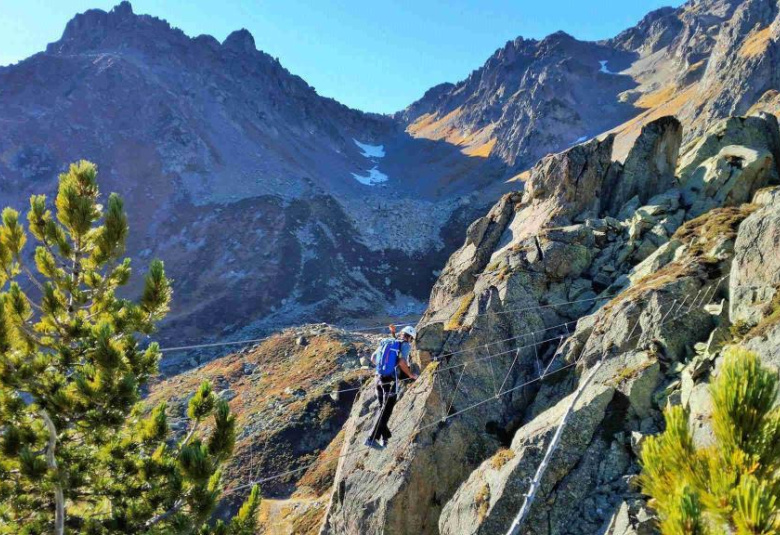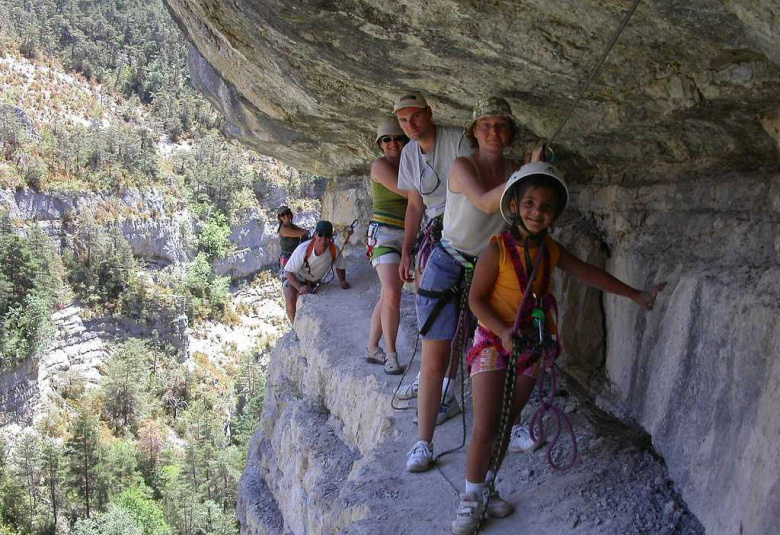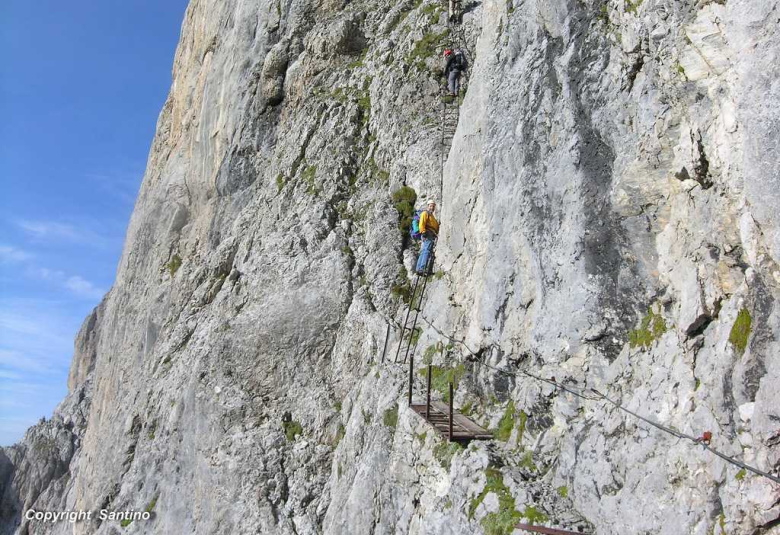

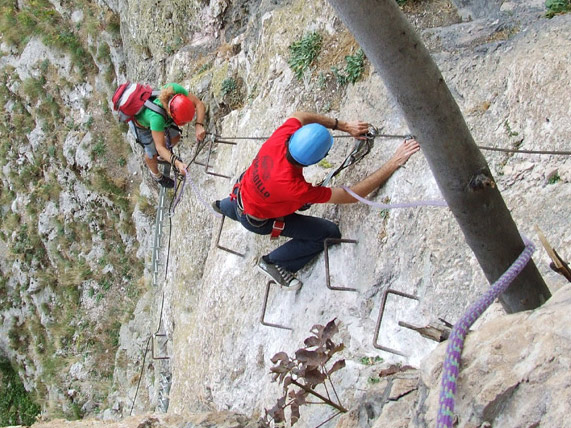
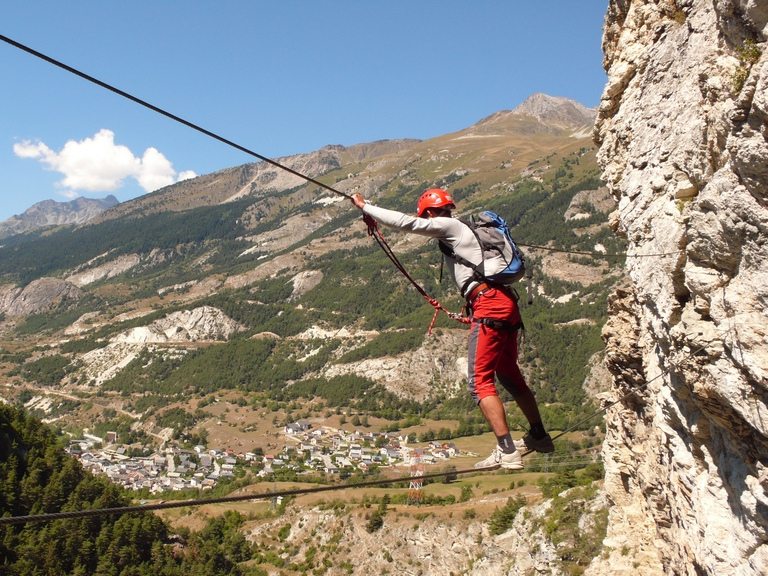
"Iron Roads", translated from Italian, is a cross between hiking and climbing. Via Ferrata routes are built into rock faces with cables and ladders and other equipment designed to facilitate people's progression along the route and to optimize their security.
Developed by the Italian Army in the Dolomites during WW1 to access "inaccessible" peaks and equip safe passage for the troops carrying heavy equipment, Via Ferrata is now a new activity in its own right for people keen to try something a little more challenging than alpine hiking. Although no real climbing ability is needed, a via Ferrata does demand a steady head for heights
Where to do some Via Ferrata in Chamonix?
The Via Ferrata des Evettes
The Via Ferrata des Evettes is a brilliant idea of the Compagnie du Mont-Blanc with advice from the Compagnie des Guides and represents the first Via Ferrata in Chamonix (La Flégère).
The Via des Evettes is excellent for the whole family, and it can give children a take for climbing and adventure.
The Chamonix Via Ferrata is free of charge - you will just need to buy a return lift ticket for La Flégère cable car.
You can read everything about the two sections of the Via des Evettes, how to access them, the equipment needed and more, here.
Via Ferrata of Cascade de Berard
Starting from the hamlet of Buet, the new via ferrata of the Bérard waterfall winds on both sides of the gorge of the Bérard torrent in a fresh and invigorating atmosphere.
The entrance to the via ferrata route is a 15-minute walk from the Buet car park
Via ferrata of the Bérard waterfal
Via Ferrata de Curalla
The only via ferrata facing Mont-Blanc, the Via Ferrata de Curalla is located only 30-minutes driving distance from Chamonix-Mont-Blanc.
It is an intermediate route, which offers breathtaking views and constitutes an extraordinary experience.
You can read everything about the Via Ferrata de Curalla here.
Via Ferrata "Thermal Park" in Saint-Gervais
Via Ferrata "Thermal Park" in Saint-Gervais takes you along the cliffs of the Gorges du Bonnant, offering breathtaking views and an unforgettable experience.
However, be aware that this via ferrata is considered very difficult, therefore it is mandatory to have a very good physical condition in order to complete this route.
You can read everything about the Via Ferrata du Parc Thermal here.
Moreover, there are lots of Via Ferratas close to Chamonix within a 30min to 1-hour drive.
- Borderan in the Col des Aravis near La Clusaz
- Yves Pollet Villard in La Clusaz
- Saix du Tour in Avoriaz / Morzine
- Saix de Miolène in Chapelle / Abondance
- Tour de Jalouvre in Grand Bornand
- Collonges in St. Julien / Genève
- Reclavier in St. Julien / Genève
- du Mont in Sixt Fer à Cheval
- la Roche à l'Agathe in Thônes
How to practice the Via Ferrata?
- It is recommended to take a guide or an instructor, either for a first-time experience or also to discover the best sites.
Via Ferrata Specialists, Providers and Guides
- There are also Via Ferrata and Rock Climbing Instructors which specialize in Via Ferrata
- Mountain Guides are qualified to take you on Via Ferrata
Required Equipment
- a via Ferrata sling equipped with a braking system and 2 carabiners - designed to prevent a fall.
- a helmet
Also, as in any climbing activity, you should bring a climbing rope, carabiners, appropriate footwear, gloves, and a backpack with supplies and a water bottle.
When you hire a guide, normally this specialized equipment will be provided for you.
For more information visit www.viaferrata.org.