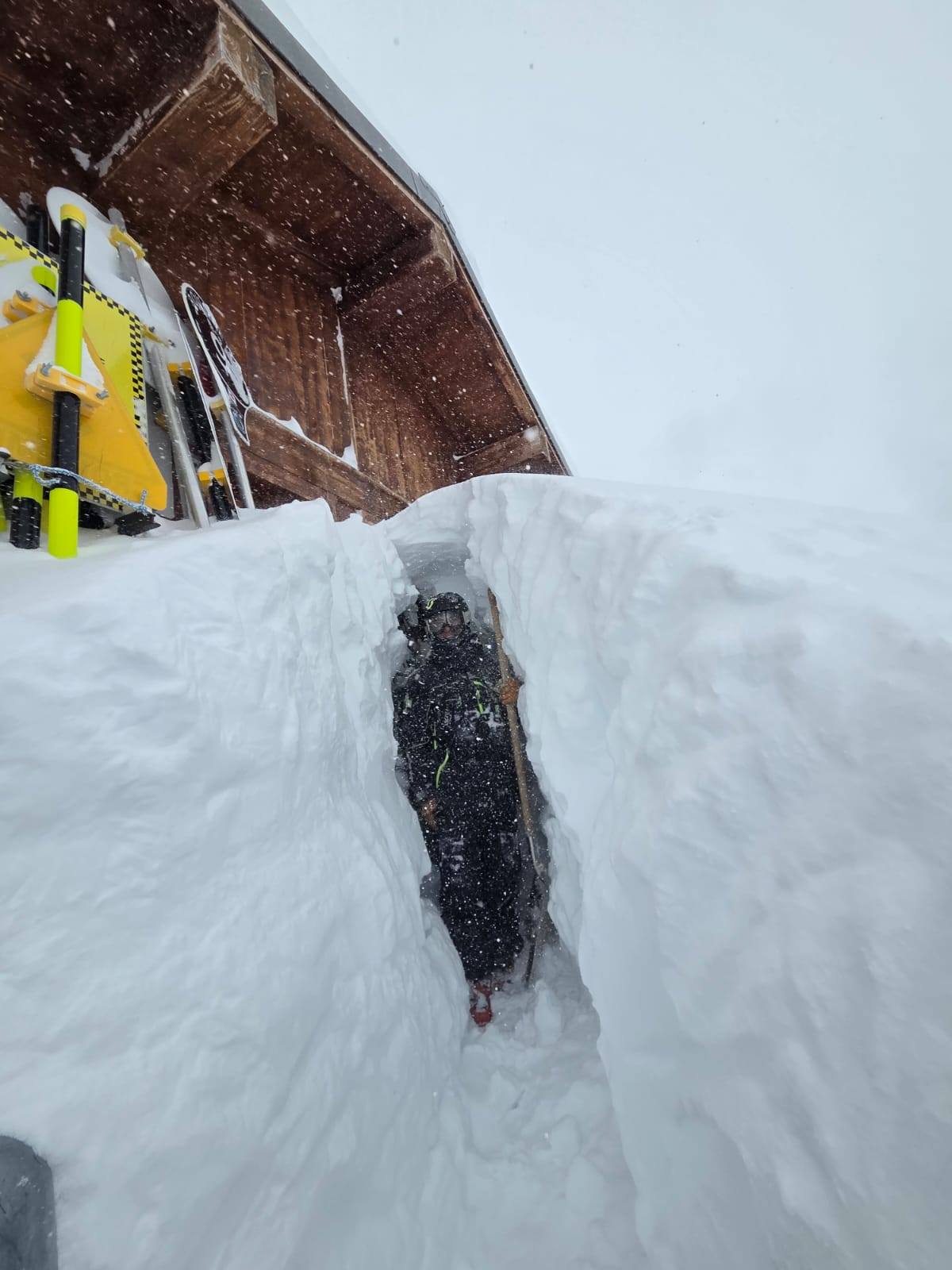
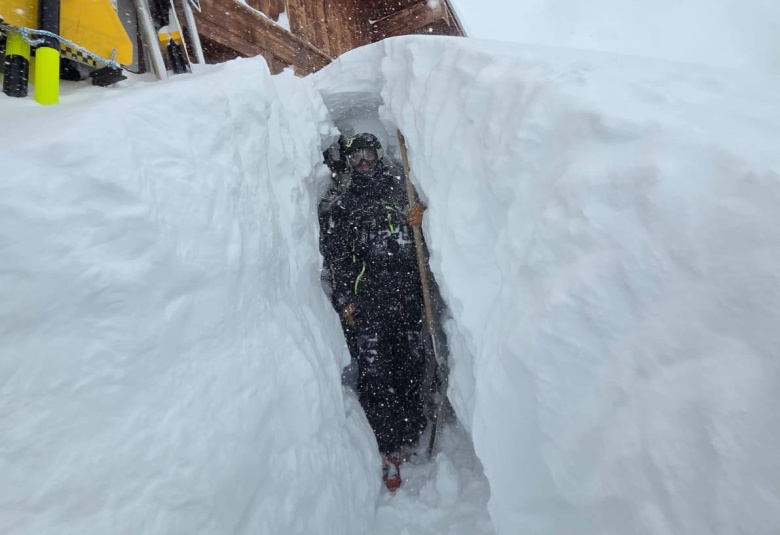
With nearly three meters of snow in ten days and an avalanche risk at its highest level, the ski patrol teams in Chamonix were put to the test. Ski patrollers carried out numerous preventative avalanche control operations and made difficult decisions to ensure skiers' safety.
The mountain offered no respite. In ten days, nearly 2.9 meters of snow fell at Brévent (2,525 m) and more than three meters at the top of the Bochard gondola (2,765 m) in Grands Montets. With the wind constantly shifting, the snowpack became heavily loaded and unstable, causing the avalanche risk to fluctuate between the two highest levels of the danger assessment. In the Chamonix valley, where the slopes are steeper than elsewhere, these extreme conditions dictated the pace of the patrollers' days and nights.
Almost every morning, the avalanche control plan (PIDA) had to be implemented, meaning waking up before dawn. At Brévent, as many as 110 preventative avalanche control blasts were sometimes carried out each day, often with a 95% success rate. "I've almost never seen such enormous quantities of snow released," said one of the ski patrollers.
Le Dauphiné